


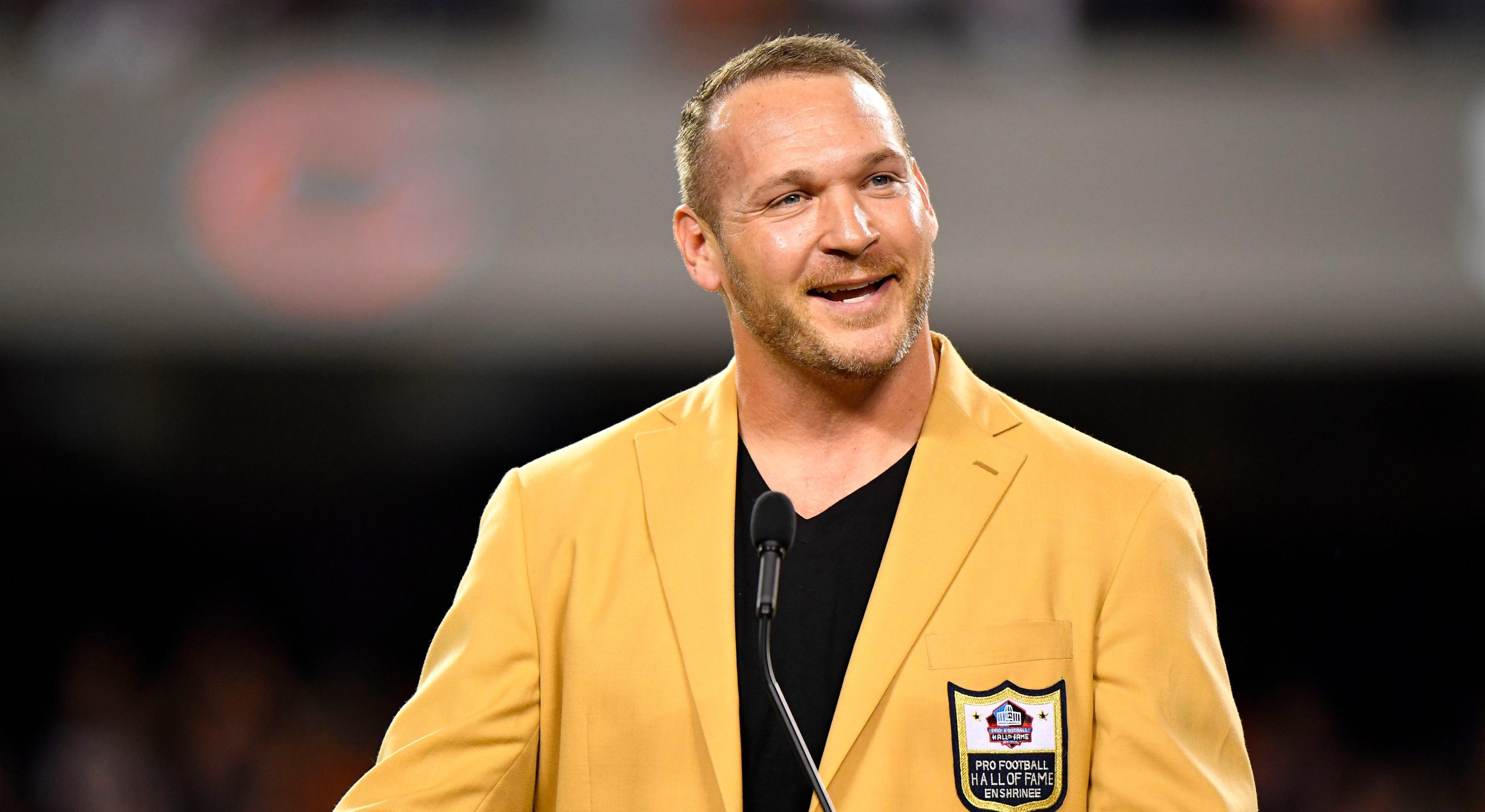
Chicago Bears legend Brian Urlacher slams Illinois Democrats as team prepares to leave state
Brian Urlacher, a former NFL player and Hall of Famer, recently made headlines by blaming Illinois Democrat leaders for the Chicago Bears potentially leaving Soldier Field. Urlacher’s comments were met with mixed reactions, with some praising him for speaking out against what they see as misplaced priorities, while others criticized him for politicizing the issue.
In a recent interview, Urlacher criticized Illinois Democrat leaders for prioritizing spending on illegal immigrants over keeping the Bears in Soldier Field. He argued that by neglecting the needs of the team, the politicians were jeopardizing the city’s economy and cultural identity. Urlacher’s comments sparked a heated debate among fans and politicians alike, with many questioning the validity of his claims and the appropriateness of his public statements.
Urlacher’s criticism of Illinois Democrat leaders comes at a time when tensions are running high in the state over issues of immigration and public spending. The Bears’ potential departure from Soldier Field has only added fuel to the fire, with many pointing fingers at the politicians they believe are responsible for the team’s uncertain future.
But Urlacher’s comments have also shed light on a larger issue facing professional sports teams across the country. As stadiums age and teams seek better facilities and more revenue streams, cities and states are often left to foot the bill. In some cases, this can lead to tense negotiations between teams and local governments, with taxpayers often left to bear the brunt of the costs.
In the case of the Bears, the team has been seeking a new stadium for years, citing the limitations of Soldier Field and the potential for increased revenue in a more modern facility. But with the city and state facing budget constraints and other pressing issues, finding the funds for a new stadium has proven to be a difficult task. This has led to speculation that the Bears could potentially move to a different city, leaving behind a storied history and a loyal fan base.
Urlacher’s comments have brought attention to the complex relationship between professional sports teams and the cities in which they are based. While teams bring economic benefits and cultural significance to their communities, they also require significant investment and support from local governments. This delicate balance can often lead to disagreements and tensions, as each side seeks to prioritize its own interests.
In the case of the Bears, the team has a long history in Chicago, dating back to 1919. Over the years, the team has become an integral part of the city’s identity, with a loyal fan base and a strong presence in the community. But as the team seeks to modernize its facilities and improve its revenue streams, it has run into roadblocks with local politicians who are hesitant to commit public funds to the project.
Urlacher’s comments have reignited the debate over whether professional sports teams should receive public funding for their stadiums. While some argue that teams bring economic benefits and cultural significance to their communities, others question the wisdom of using taxpayer dollars to subsidize wealthy team owners and players. This debate has been playing out in cities across the country, with some teams successfully securing public funding for new stadiums, while others have faced backlash from residents and politicians who are wary of the costs involved.
In the case of the Bears, the team’s potential departure from Soldier Field has sparked fears among fans and city officials alike. Many worry about the economic impact of losing the team, as well as the loss of a cultural institution that has been a part of Chicago for over a century. Urlacher’s comments have only added to these fears, as fans grapple with the possibility of their beloved team leaving the city for greener pastures.
But while Urlacher’s comments have drawn attention to the issue, they have also sparked controversy and division among fans and politicians. Some have praised him for speaking out against what they see as misplaced priorities, while others have criticized him for politicizing the issue and spreading misinformation. The debate over the Bears’ future in Chicago is far from over, with both sides digging in their heels and preparing for a long and contentious battle.
In the end, the fate of the Bears and Soldier Field remains uncertain. As the team continues to seek a new stadium and negotiate with local officials, fans are left to wonder what the future holds for their beloved team. Urlacher’s comments have only added to the uncertainty and anxiety surrounding the issue, as Chicagoans grapple with the possibility of losing a storied franchise that has been a part of their city for generations.
As the debate rages on, one thing is clear: the relationship between professional sports teams and the cities in which they are based is a complex and fraught one. While teams bring economic benefits and cultural significance to their communities, they also require significant investment and support from local governments. Finding a balance between these competing interests is no easy task, and the future of the Bears in Chicago hangs in the balance as fans, politicians, and team officials continue to grapple with these difficult questions.
Source: Fox News





















 LIVE
LIVE LIVE
LIVE